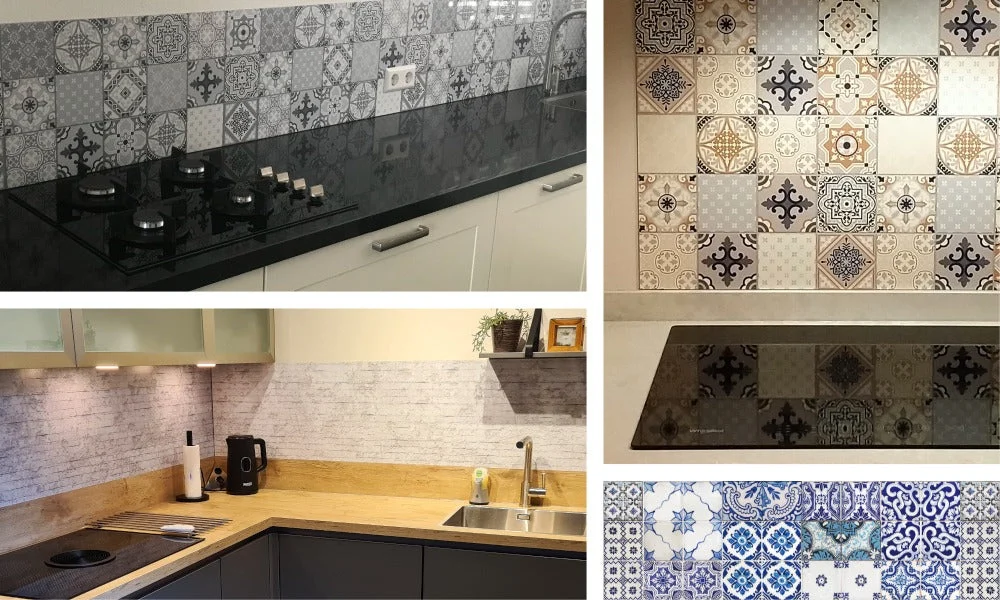
At Designerwand, we’re fans of the ‘Portuguese’ tile, but really of all patterned tiles. When you see the tiled buildings in Lisbon, you can’t help but be impressed. Everywhere around you, you feel the history. The city has a very rich history when it comes to ceramic wall tiles.
A bit of history about Portuguese tiles
The decorated tile was already widely used in the 16th century and it is still very popular to adorn buildings with tiles. At the end of the 15th and beginning of the 16th century, the city imported tiles from Valencia, but especially from Seville. In those cities, they worked according to the techniques and with motifs of the former occupiers: the Moors. They introduced the decorated tile in Spain. In our collection, you’ll find a number of panels with these versatile patterns.
In the mid-16th century, they began producing ceramic tiles in Lisbon itself. A large number of workshops were established. But the tile makers working there, many of whom came from Flanders, did not apply the ‘dry cord’ technique but painted directly on the tiles. They also used more themes of European origin and worked in the Mannerist style. Often complete tile tableaux were designed to order, covering an entire wall. That was of course an expensive affair, and in the 17th century they started designing the repeating motifs we know so well today. With these pattern tiles, it was possible to cover a small wall as well as a large one. The walls were then finished with beautiful borders and strips that accentuated windows and doors.
Our backsplashes are easy to keep clean
The appearance of the walls was, and still is, very artistic, but also has a great practical advantage: it ensured that the walls were made waterproof. With our Designerwand, there is even an extra advantage: there are no grout lines, so your new Designerwand is ideal to clean.
In the beginning, the colour use was limited to a few colours: blue and yellow on a white tin oxide base. This was followed by a very short period of more colour use, but eventually only blue was used at the end of the century. At Designerwand, we also have more neutral colours in our range.
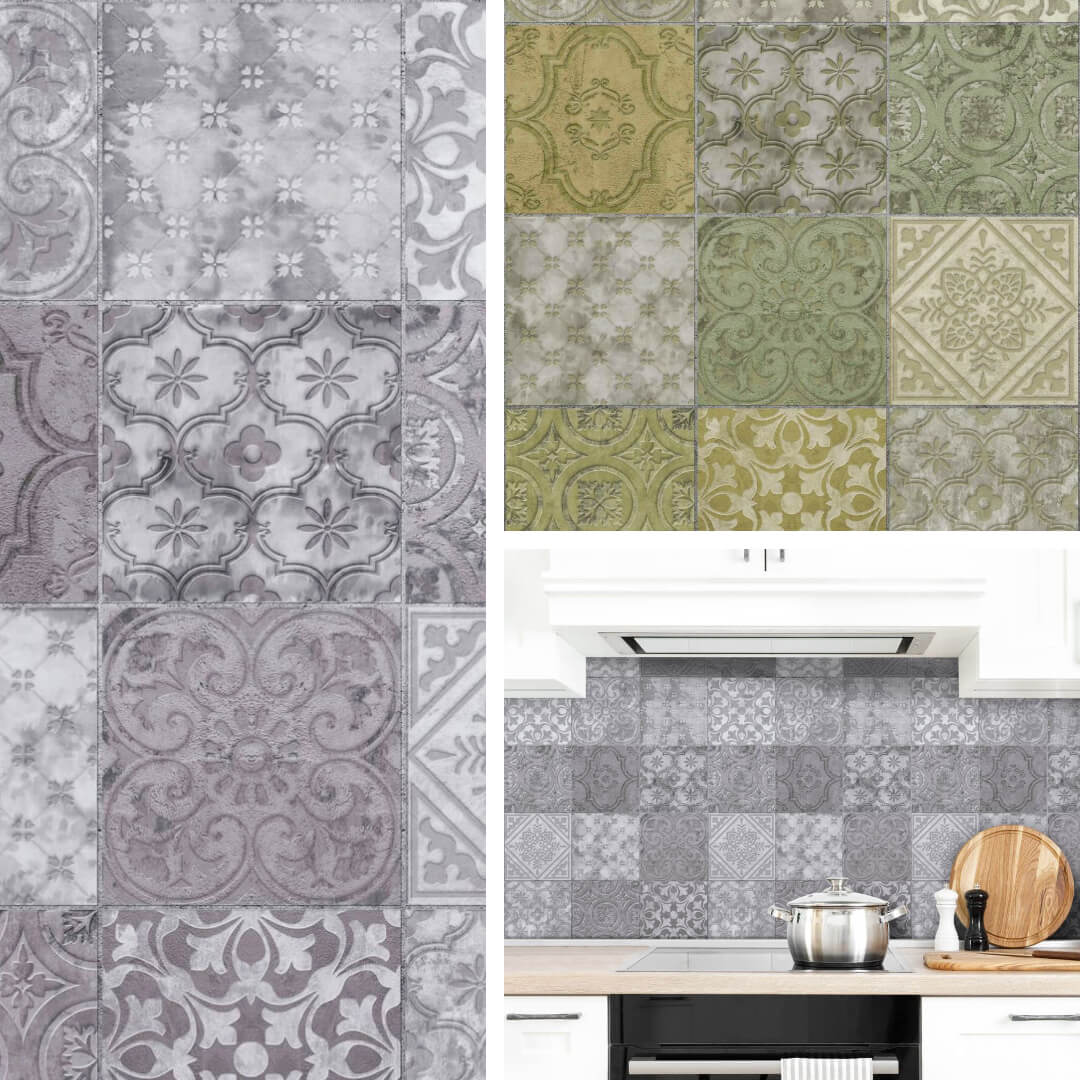
The tile makers became increasingly creative in mixing and matching the various patterns and borders. Eventually, instead of abstract geometric figures, they also started designing flowers, swirls, leaves and shells.
Portuguese tile tableaux are said to tell stories, reinforcing the symbolism and atmosphere in all kinds of spaces. Because they were used so extensively in the 17th century, the use of pattern tiles faded somewhat into the background.
After the great earthquake of 1755 that destroyed the centre of Lisbon, tiling was rediscovered. During the reconstruction, buildings began to be tiled both inside and out. Rental properties were also richly tiled from around 1875, an idea that came from Brazil. Some buildings were richly decorated with handmade tiles, while others already featured more industrially produced tiles. It became something of a trademark of Portuguese cities and villages. And so they continued decorating according to prevailing trends: Art Nouveau and Art Deco. Later, well-known artists were asked, for example, to design tiles for metro stations. This is, in a nutshell, how the varied streetscape of Lisbon came about.
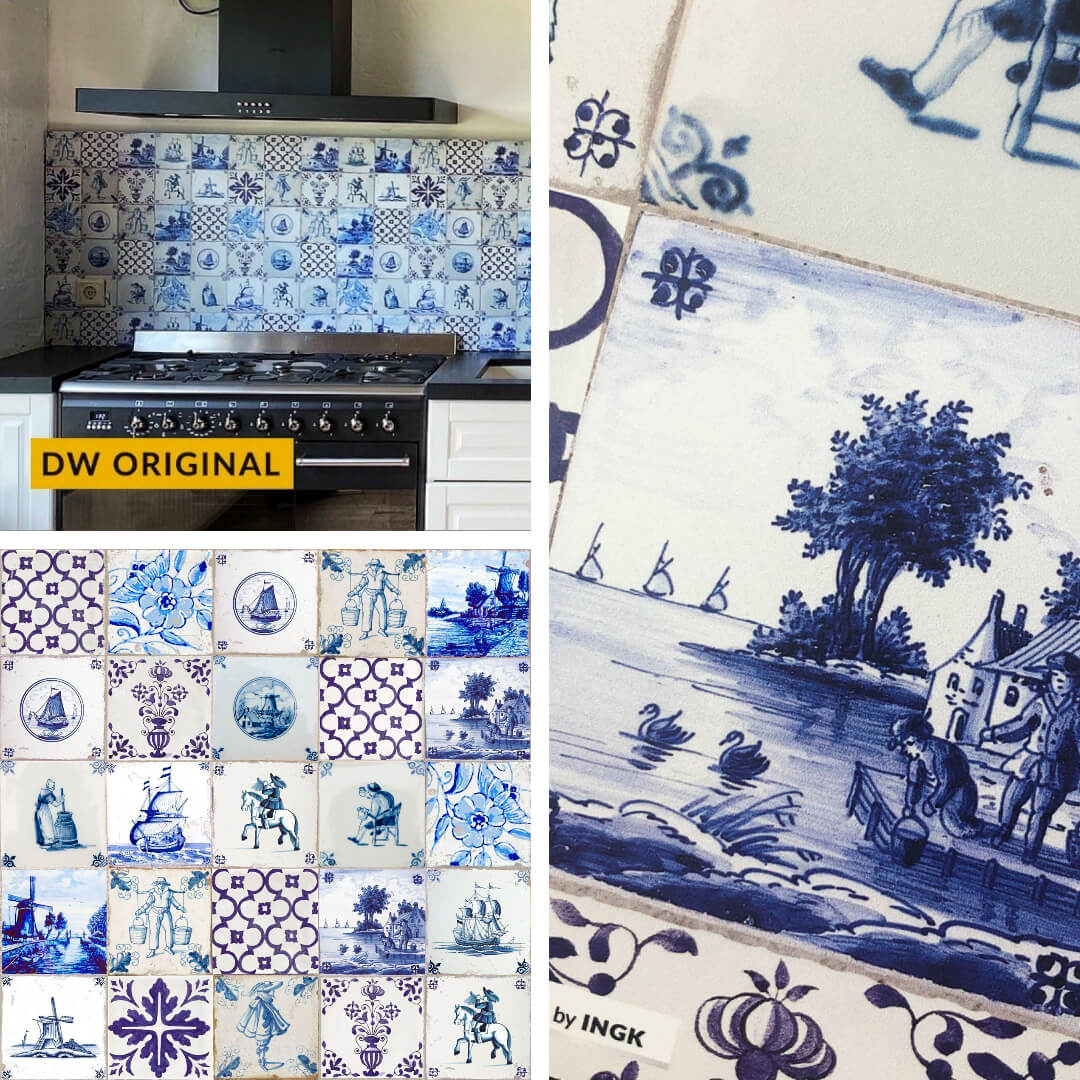
Delft Blue on your kitchen backsplash
In other countries too, tile walls with beautiful designs have been and are still being used. Very inspiring for us. Our designers love old tiles, old tile motifs and well-worn materials. You can see that in a large number of our Designerwand Collection and Wallpaper Collection. Besides the Portuguese and Brazilian tile motifs, there are of course also our own Dutch Delft Blue tile motifs.
Looking for a different tile style? Kitchen backsplash tiles brings all 99 tile designs together, from herringbone and metro tiles to Delft blue and Portuguese tiles.