A gas hob asks more of your backsplash than an induction hob does. The heat from a gas hob can build up considerably, especially when you have several burners on and the gas turned up high. With an induction or ceramic hob it is many times less. That is why it is so important to keep enough distance between the flame and the backsplash, and to choose the right material. In this article you will read how to measure that distance, which of our three materials can go behind gas, how high a splashback behind the hob should be and how to combine it with the rest of the kitchen. All our kitchen backsplashes are made to measure in the backsplash configurator.
Why gas is different from induction
With induction, only the pan gets hot; the hob around it stays lukewarm and the wall behind it hardly notices. With gas there is an open flame, and its hot air rises up along the wall. The closer the hob is to the wall and the bigger the burner, the hotter that wall gets. A freestanding cooker pushed up against the wall, with the large wok burner at the back, is the toughest situation. A built-in hob with a strip of worktop behind it is a lot milder.
So the heat from induction or ceramic cooking cannot be compared with that of a gas hob. With induction or any other hob, extra protection is not needed and you can choose any material. With gas, you look at the distance first.
A backsplash behind the hob: how does that work?
It is important that there is enough distance between the backsplash and the flame. Do not measure that distance on paper but in the kitchen: turn on the rear burner and measure from the edge of the flame to the wall. If the distance between the flame and the backsplash is 10 cm or more, you can use any of our materials. If it is less than 10 cm, you choose DW Solid or DW Glass, or you place a separate panel of toughened glass between the hob and the wall. Such a glass panel absorbs the direct heat, and the backsplash behind it stays looking good.
Also look at what hangs above the hob. With gas, the cooker hood has a larger prescribed height than with induction; you will find it in the hood’s manual. The backsplash usually runs up to the underside of the hood, so that height also determines how high your backsplash will be.

Which material behind a gas hob
We make backsplashes in three materials. The difference lies mainly in heat and budget.
DW Original: only with at least 10 cm of distance
DW Original is a 3 mm aluminium composite panel: two layers of aluminium with a core of hard plastic. It is our most popular material, light, can be glued over existing tiles and heat-resistant with induction and ceramic cooking. With gas, DW Original is only suitable if the hob is at least 10 cm away from the backsplash. If the hob is closer to the wall, go up a step.
DW Solid: solid aluminium, directly next to gas
DW Solid is 1.5 mm solid aluminium. It can withstand high temperatures and does not warp, not even with prolonged exposure. This is the material for directly behind a gas hob, and also for next to an air fryer or oven that vents heat to the back. The print goes directly onto the aluminium, with a protective coating over it. A panel is at most 300 x 146 cm; larger walls are delivered in several pieces that join seamlessly. Read more about the material in our article on the aluminium kitchen backsplash.
DW Glass: toughened glass, the highest heat resistance
DW Glass is toughened glass with the print on the back. It gives the most depth in the image and has the highest heat resistance: the glass can take temperatures up to 250°C without damage, so it is excellent behind a gas hob. It is heavier and more expensive than the other two, though, and the delivery time is longer. Everything about glass is in our article on the glass backsplash.
If you are in doubt because of a gas hob or an appliance that blows heat towards the wall, choose DW Solid: it is the combination of heat-resistant, light enough to fit yourself and affordable. How the three materials otherwise compare, in scratch resistance, weight and price, is explained on the materials page.
Splashback or whole wall?
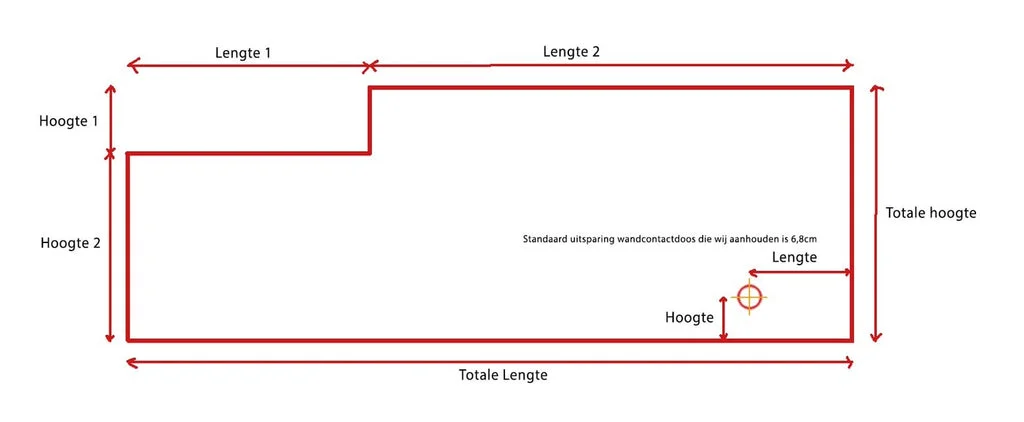
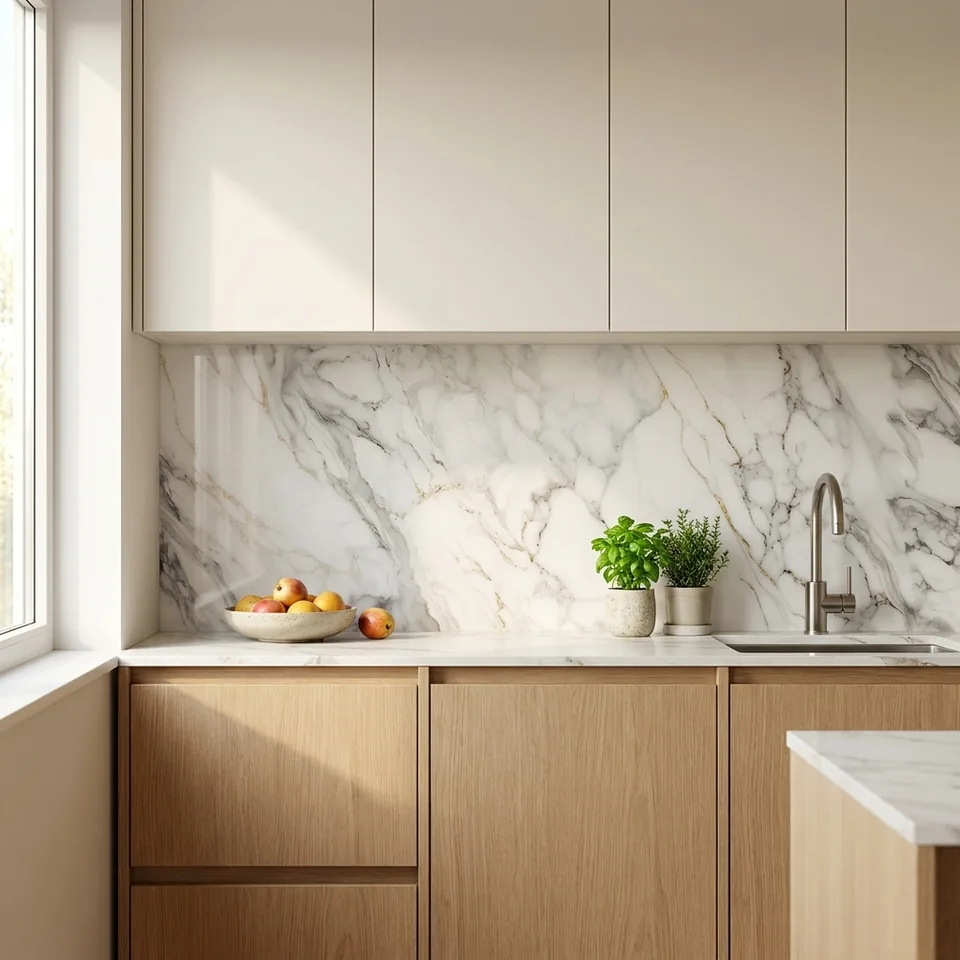
You do not have to cover the whole kitchen wall. A splashback only as wide as the hob, 60 or 90 cm wide for example, up to the cooker hood, catches most of the grease and most of the heat. That is a good choice if the rest of the wall is already tidy, or if you want to give the hob an accent of its own. If you want one continuous image above the whole worktop, you make the wall in one piece, with the cut-outs for sockets in it. You order both in the same configurator; you just enter different measurements. How to measure is explained in our measuring guide.
Combine different backsplashes behind the hob
Go for a new look in the kitchen by combining our backsplashes. Choose a different design behind the hob than above the rest of the worktop, or go for a stainless steel look there. Many of our designs look good in combination with a stainless steel look panel behind the hob: the hob then gets a sleek, professional surface, and the rest of the wall can have colour or pattern. You choose the material per order: add the section behind the hob as a separate wall in DW Solid and the rest in DW Original.
Fitting behind a hob
You fit a backsplash yourself, with mounting adhesive, over the existing wall or over tiles. Behind a gas hob there is one extra rule: let the adhesive cure completely before you push the cooker back and start cooking, and keep to the distance you measured earlier. The whole step-by-step plan, including cut-outs and finishing the edges, is in our fitting article.
See how it looks in your kitchen
Curious how it could look in your kitchen? Choose your designs and send in a photo of your kitchen via the simulation service. We then place the backsplash in your kitchen, so you can see how the design falls behind the hob. If you want to see the colour and the top layer for real, order a 20 x 20 cm sample.
Frequently asked questions about a backsplash with a gas hob
How much distance should there be between a gas hob and the backsplash?
Measure with the rear burner on, from the edge of the flame to the wall. At 10 cm or more you can choose any material, including DW Original. At less than 10 cm you choose DW Solid or DW Glass, or you place a separate panel of toughened glass between the hob and the wall.
Which material is best behind a gas hob?
DW Solid, 1.5 mm solid aluminium: heat-resistant, does not warp and is light enough to fit yourself. DW Glass, toughened glass up to 250°C, is also possible and gives more depth in the image, but is heavier and more expensive. DW Original only with at least 10 cm of distance.
How high should a splashback behind a gas hob be?
Usually up to the underside of the cooker hood. With gas, the hood manufacturer prescribes a greater height than with induction, so check your hood’s manual. Without a hood, make the splashback at least high enough that splashes and the rising heat from the rear burner land on it, so well above the tallest pan you use.
Can I fit a backsplash behind the hob over existing tiles?
Yes. DW Original and DW Glass are glued directly over flat, clean tiles. Behind gas the same material rule applies: at less than 10 cm of distance you choose DW Solid or DW Glass.
Directly next to your gas hob: DW Solid or DW Glass
If your gas hob is close to the wall, choose DW Solid or DW Glass: both can go directly next to gas. We only recommend DW Original if there is at least 10 cm between the hob and the wall.