Moroccan tiles in the kitchen: sometimes that means zellige, small glazed tiles that each differ slightly in colour, and sometimes the graphic patterned cement tiles with stars, clovers and arabesques. Both give a kitchen warmth and character, and both have one drawback: grout lines, and a great many of them. In this article you will read which Moroccan looks we have as a kitchen backsplash, how to combine them with a modern kitchen and how to put the panel together to measure in the configurator, without a single grout line.
Zellige or patterned tile: two very different looks
When people say “Moroccan tiles”, they usually mean one of two things. Zellige are handmade, glazed tiles from Fez and the surrounding area: small, square, with a glaze that varies in thickness and colour from tile to tile. From a distance it is a calm surface in one colour, up close it is lively, with sheen and small irregularities. Patterned tiles are the opposite: flat cement or ceramic tiles with a graphic, often geometric motif that runs across several tiles. You can see those from the other side of the kitchen.
The first is a choice of colour, the second a choice of pattern. If you want a kitchen that stays calm but has warmth, you choose the zellige look. If you want the backsplash to be the centrepiece, you choose a pattern.
The zellige look: colour without pattern
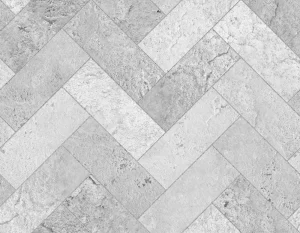
Our antique tiles have exactly that weathered, glaze-like surface of handmade tiles, and every tile turns out slightly different. The antique tile Green Teal shows olive, sage and moss green tiles with sheen and depth, a colour that goes with wood and with white. The category has more colours, from sea green and ochre brown to blue and off-white. The small glazed metro tiles of the Tiless series belong to this family too: dark green weathered and blue glazed give the same lively effect in an elongated tile.
The difference from real zellige: our panel is flat and smooth, so no grout lines that hold grease and no sharp edges. You keep the look, without the maintenance. What the tile print looks like up close, and why it looks realistic, is explained in our article on the tile look without real tiles.

Patterned tiles: stars, clovers and arabesques
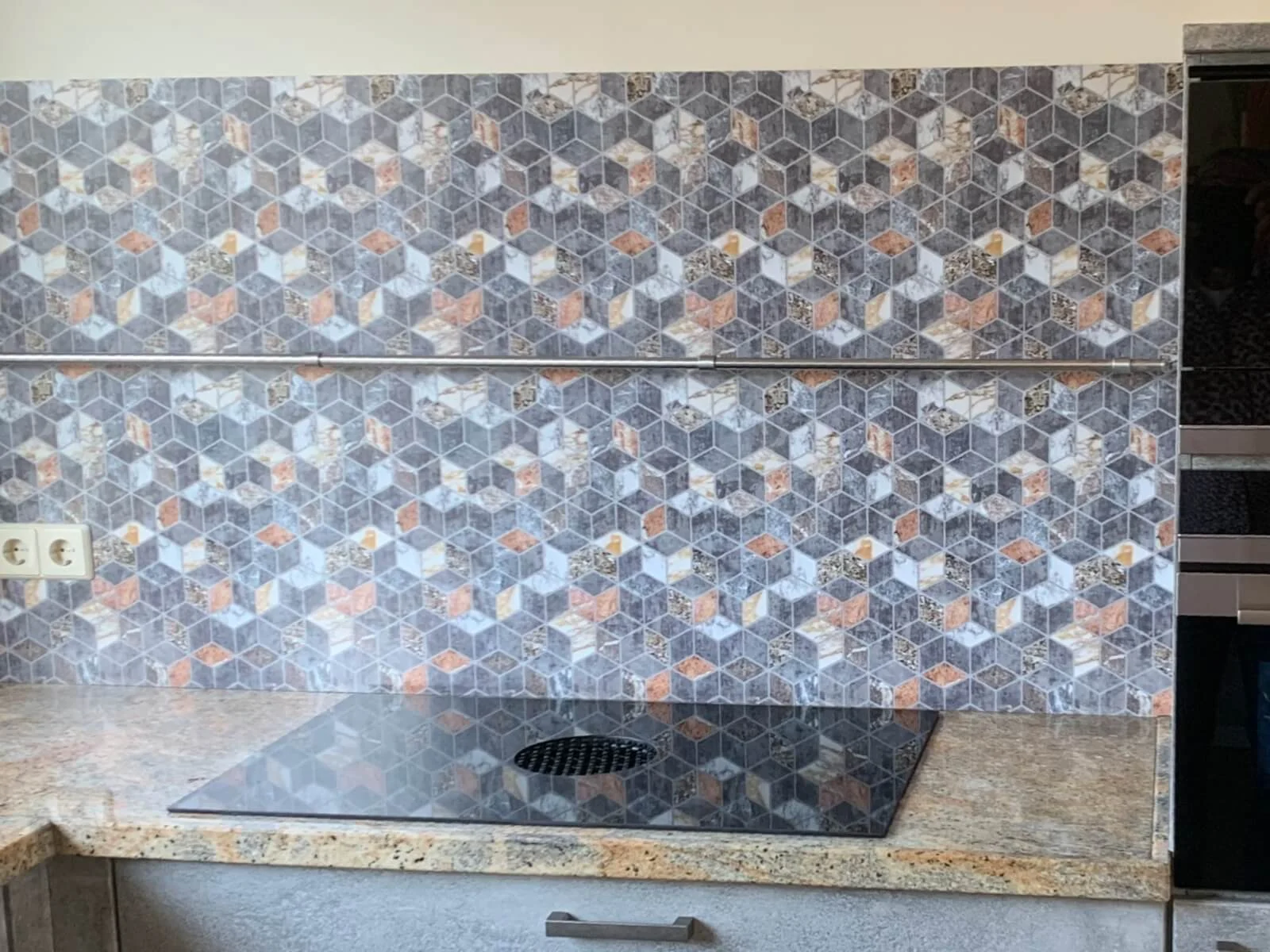
For the graphic Moroccan pattern there is Moroccan Design Tiles DW7070: a mix of weathered grey and petrol blue tiles with ornate motifs, which brings the atmosphere of a riad into the kitchen. The design is calm enough for a whole wall, because the colours are muted and the tiles look weathered rather than new.
Cleaner and lighter is the Casablanca series: flower and clover shapes in fine lines, like handmade cement tiles, but on a flat panel. Casablanca has grey lines on white, Casablanca Gold and Casablanca Bronze set the pattern in a metallic shade, and Casablanca Dark turns it around, with the pattern in silver on dark. That last one looks surprisingly good with a black or anthracite kitchen.

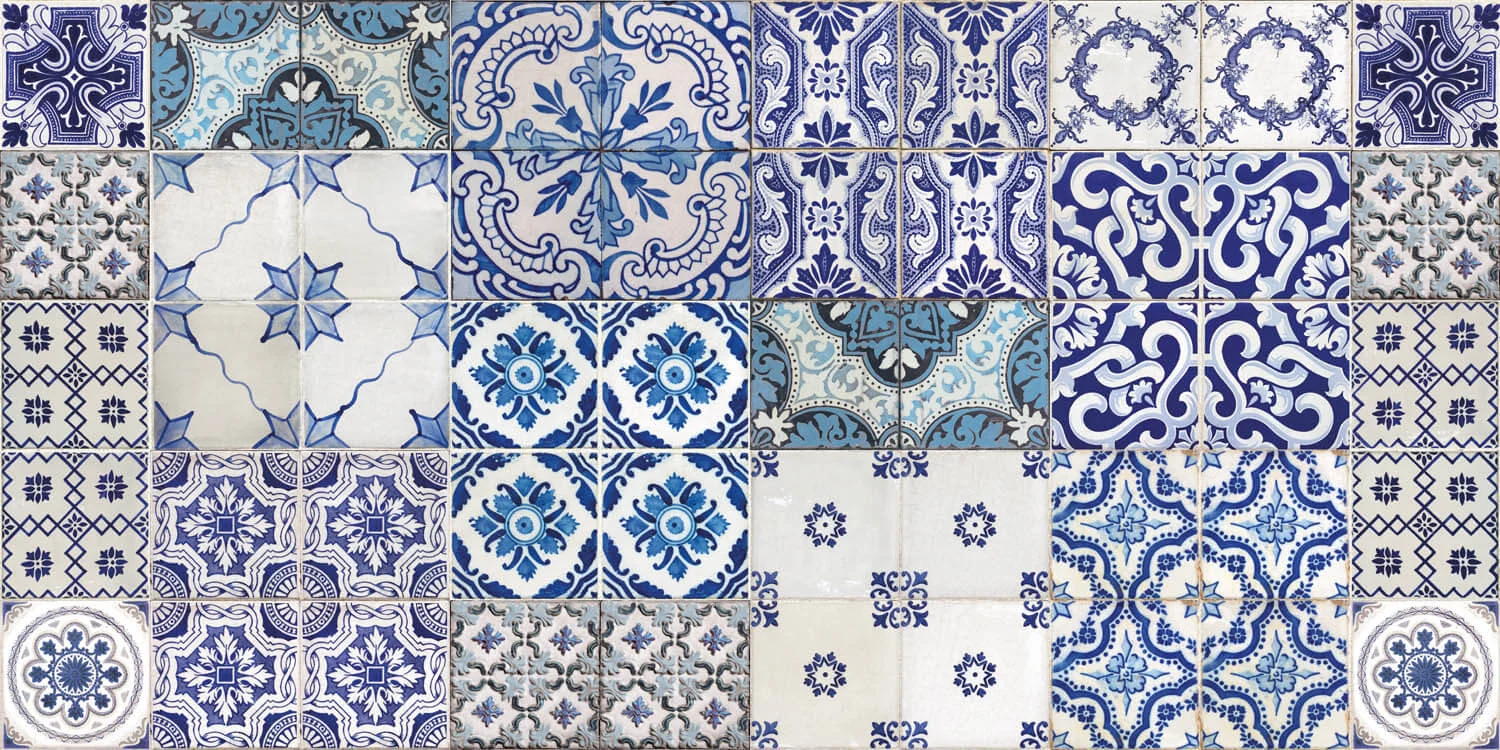
If you want the Moroccan feel with more colour, take a look at the stained glass in green: arabesque tile shapes in deep green, turquoise, ochre gold and blue. And if you would rather head for the Portuguese side of the Mediterranean, you will find those in Feldspar (warm orange, blue and grey), Star Dust (shades of grey on dark) and the weathered azulejo in blue. We wrote about those separately in Portuguese tiles in the interior.
Combining with a modern kitchen
Moroccan tiles do not only belong in a country-style or bohemian kitchen. The secret lies in the dosage and in the colour of the fronts.
- White kitchen. The classic combination. A patterned tile in grey or petrol gives a white kitchen exactly the character it lacks. Keep the worktop calm, without a pattern of its own.
- Wooden kitchen. Choose the zellige look in green or ochre brown. Wood and a glaze colour reinforce each other; a busy pattern next to wood quickly becomes too much.
- Black or anthracite kitchen. Casablanca Dark, or a zellige look in deep green or blue. The pattern in silver on dark keeps the kitchen sleek.
- Only behind the hob. If you want to dose the pattern, put it only behind the hob, up to the cooker hood, and keep the rest of the wall plain. That way it becomes an accent rather than wallpaper.
A rule of thumb: one busy layer per kitchen. If the worktop has marble veining or the floor has a pattern, choose the zellige look for the wall. If everything is plain, the wall can carry the pattern.
Why a panel instead of real tiles
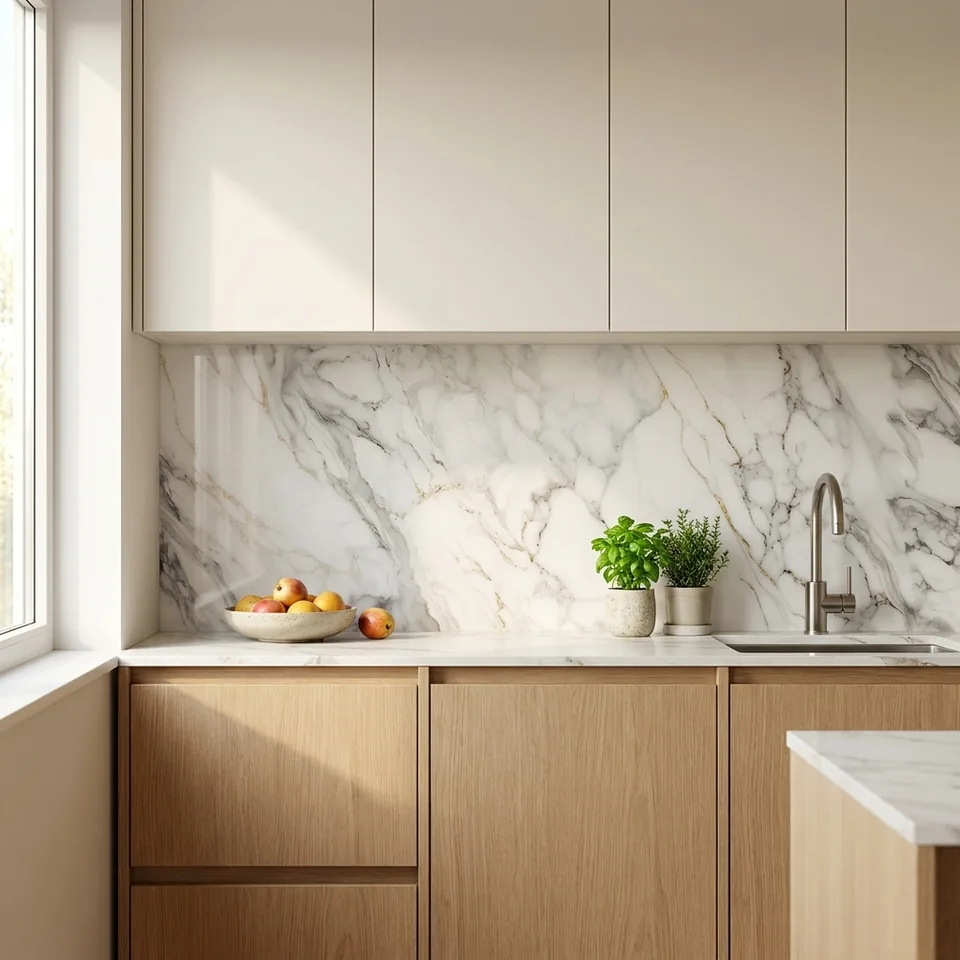
Real zellige and cement tiles are beautiful, but they need a tiler, they have hundreds of grout lines that absorb grease and moisture, and cement tiles have to be sealed. Our backsplash is a single made-to-measure panel, including cut-outs for sockets, which you fit yourself over the existing wall or over old tiles. No grout lines, no sealing, cleaning with a damp cloth. A backsplash costs from 150 euros and is available in three materials: DW Original (3 mm aluminium composite, the most popular option with induction), DW Solid (solid aluminium, for behind a gas hob) and DW Glass (toughened glass, the most depth and sheen, which works particularly well with a zellige look). If you cook on gas, first read which backsplash works with a gas hob.
How to order
First order a 20 x 20 cm sample of the design you like. You then see the colour in your own light and the sheen of the top layer, and with a tile design also how realistically the grout and the glaze are printed. Then you measure the wall, enter the measurements and the cut-outs in the configurator and choose the material. If you want to see first how it looks in your kitchen, send in a photo via the simulation service.
Frequently asked questions about Moroccan tiles in the kitchen
What is the difference between zellige and Moroccan patterned tiles?
Zellige are small, handmade glazed tiles in one colour, with a slightly different shade and sheen on each tile. Patterned tiles are flat cement or ceramic tiles with a graphic motif that runs across several tiles. The first is a choice of colour, the second a choice of pattern.
Can a Moroccan tile look go over my existing tiles?
Yes. DW Original and DW Glass are glued directly over flat, clean tiles. The panel is made to measure with cut-outs for sockets, so you do not need to remove anything.
Does a printed zellige look real?
From walking distance, yes: the weathered sheen and the colour variation from tile to tile are in the design. Up close you can feel that the panel is flat, and that is exactly the advantage in a kitchen. Order a 20 x 20 cm sample to judge for yourself.
Does a Moroccan pattern work behind a gas hob?
Yes, if you choose the right material. At less than 10 cm between flame and wall you choose DW Solid or DW Glass; with more distance DW Original is also possible. The design is available in all three materials.
Moroccan tiles without grout lines
Zellige look or patterned tile: we make every design as a panel to the size of your wall, with cut-outs for sockets. Order a 20 x 20 cm sample first.