A brick wall in the kitchen does something few other backsplashes manage: it gives a brand new kitchen instant age. The trouble is that real brickwork behaves badly behind a hob, because every grout line is a groove that grease works its way into. This article is about how to get the look without the upkeep, which brick designs suit which kitchen, and what to watch for when it comes to size.
What brick does for a kitchen
Brick brings warmth and texture. That is exactly why it turns up so often in kitchens that are otherwise sleek and new: it takes the sharp edge off. In a country or industrial kitchen it reinforces what is already there, in a modern kitchen it provides the counterweight.
If you are after calm and flatness rather than texture, a concrete look is the logical counterpart. We have a separate article on concrete look backsplashes for that.
Coarse or fine: the choice that sets the room
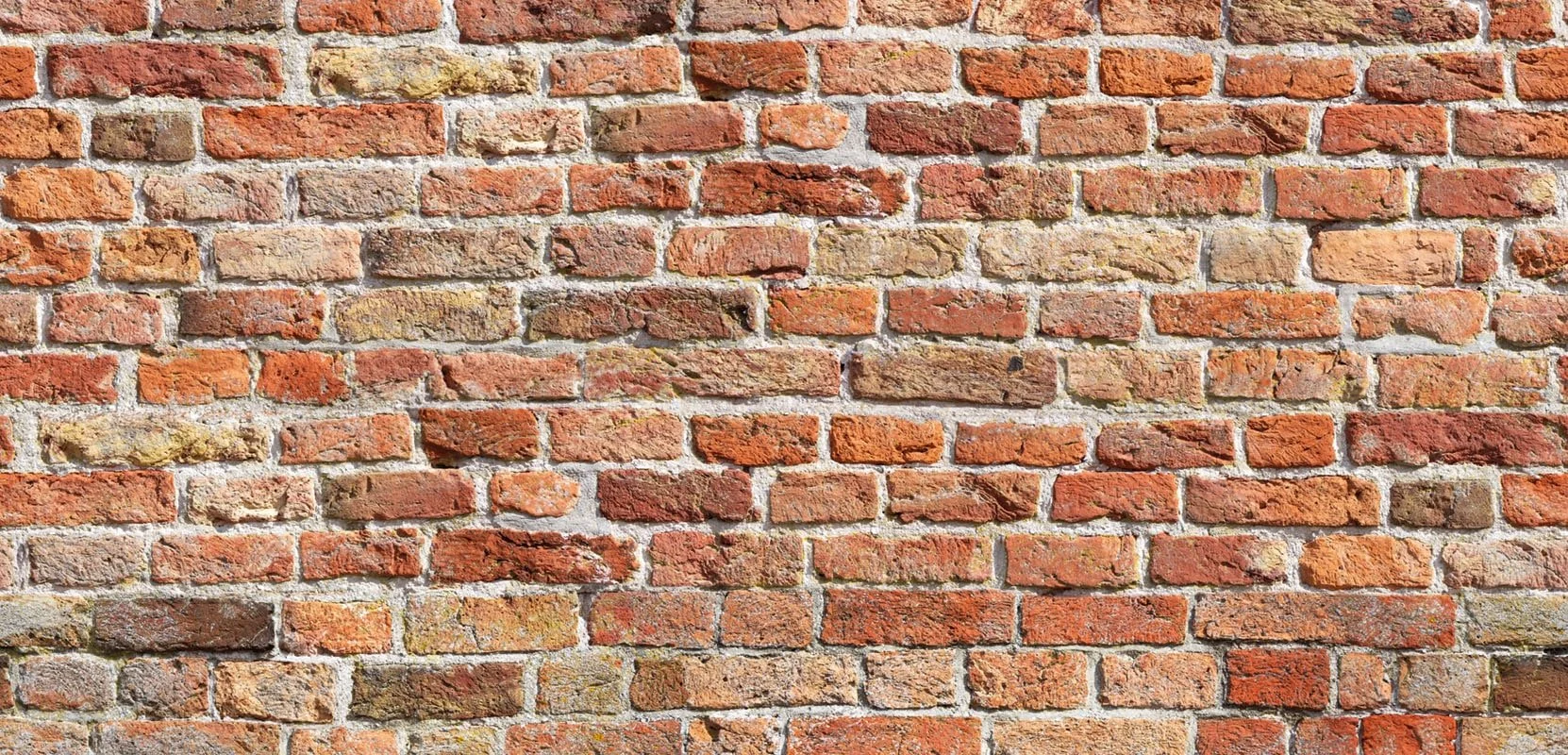
There is more difference between brick designs than people expect, and that difference counts for more than the colour does.
| Coarse brickwork | Fine brick or tile format | |
|---|---|---|
| Effect | Outspoken, plenty of depth | Reads almost as a texture |
| Space | Asks for a wide wall | Works in a narrow kitchen too |
| Suits | Industrial, loft, rugged kitchens | Country, Scandinavian, light |
| Watch out | Half bricks at the edge stand out | Can get busy over several metres |
You can see that contrast clearly in the collection, between the brick backsplash with wall texture, which keeps the coarse brickwork, and the calmer brick tile.
That last point in the table matters more than it sounds: the coarser the relief, the more the size counts. A brick that gets cut off right at the edge of the panel is noticeable. That is why we adapt the design to your dimensions, so the pattern finishes neatly instead of breaking off at random.
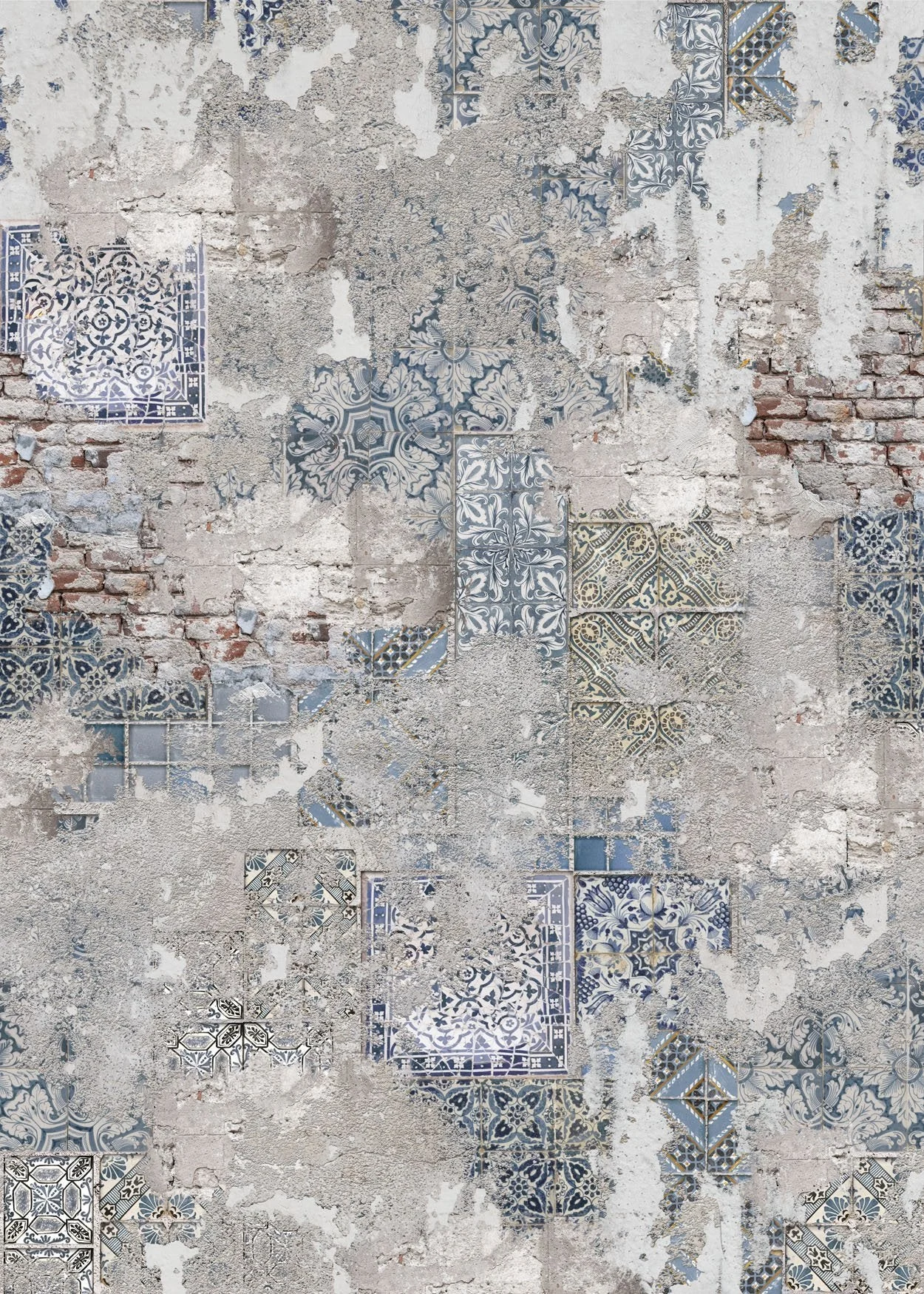
Which brick colour for which kitchen
- A white kitchen with dark brick. The classic contrast. It works best if you let wood come back somewhere, in a shelf or a table.
- A black or anthracite kitchen with white brick. Lightens a dark kitchen without making it tame.
- Wooden fronts with sand coloured brick. Warm on warm. Keep the brick fine, though, or it turns restless.
- A deep green kitchen with red brown brick. Unexpected, but green and terracotta share the same muted undertone.
If you are not sure of the exact colour of your fronts, order samples. On a 20 by 20 cm sample you see the texture and the colour as they really are, and you can hold it up against your cabinet door. A screen always shows colour slightly differently, and we wrote a separate article about that.
Why printed, and not real brick slips
This is the point most people come back to after first wanting something else. Brick slips look wonderful in a kitchen, but behind a hob and a sink they work against you.
- Grout lines hold on to grease. With brick there are a lot of them and they are porous. After a year of cooking you see it back as a dark haze around the cooking zone.
- Relief is awkward to clean. A cloth over a smooth panel is done in ten seconds. Over brickwork it is not.
- Thickness costs space. Brick slips soon build up 15 to 20 mm. That comes off your worktop and it clashes with sockets and appliances.
- Dust settles into the texture. Just above a hob it mixes with grease, and then you can no longer wipe away what you set out to.
A printed backsplash keeps the look and leaves out the problem. The surface is closed and smooth, so grease sits on top instead of soaking in, and there is no joint to keep clean. The grout line is in the print: you see the depth, but you do not feel it. Which materials we use and how they compare to one another is on the compare materials page.
Behind the hob
Behind a hob the requirements are stricter than for the rest of the wall. With induction that is rarely an issue, because the heat stays largely in the pan. If you cook on gas, the direct flame heat beside and above the burners is a factor, and we do recommend glass behind the cooking zone.
You do not have to do your whole wall in glass for that. A common solution is one continuous brick design across the entire wall, with a glass section in the same design behind the hob alone. Because we adapt the design to your measurements, the brickwork simply carries on and you barely notice the transition.
Measuring up, sockets and mounting
The backsplash is made to measure, so the measuring up decides more than anything whether it will fit later. Measure the width at three heights, because walls are rarely true, and go with the smallest figure. Cut-outs for sockets are given with the distance from the left hand corner and from the worktop. The full step by step is in measuring your kitchen wall.
You mount it with adhesive on a flat, dry surface. Holes left by the previous tiles are no problem, a bulging wall is: level that out first. The mounting guide sets out which adhesive to use and how long it needs to cure.
What a brick backsplash costs
The price depends on the size and the material, not on the design. So brick costs no more than a plain colour. You work the price out straight away by entering your width and height on the design of your choice, cut-outs included. What the difference is per material you can see on the compare materials page. If you want the whole picture first, from measurements through to mounting, read the complete guide to kitchen backsplashes.
Frequently asked questions
Is a brick look backsplash heat resistant?
Behind induction and ceramic hobs that is no problem. If you cook on gas, we recommend glass behind the cooking zone, because direct flame heat reaches the wall there. The rest of the wall can be in our standard material.
Can you tell from the grout lines that it is a print?
Up close you can see that it is flat, but the depth in the image is convincing enough that almost nobody notices. The gain is in the upkeep: no porous grout line taking on grease.
Can the backsplash go over my existing tiles?
Yes, that is one of the most popular solutions. The tiles do not have to come off, provided the wall is flat and the tiles are stuck fast. Loose tiles or a thick, uneven joint should be levelled out first.
Will the pattern be cut off at my size?
No. We scale and position the design to your dimensions, so the bricks finish neatly and no half brick lands on the edge.
How do I clean it?
A damp cloth with ordinary all purpose cleaner is enough. No scouring cream and no scouring pad, they leave the surface dull over time. Let dried on grease soak for a moment, then it comes away without any scrubbing.
Getting started
Have a look at the brick designs in concrete, tiles and stone, or browse all made to measure kitchen backsplashes. If you are torn between two designs, order samples. That is the cheapest way to avoid an expensive mistake.
Curious how it worked out for somebody else? Angelique went for a mix of brick and concrete, and she talks about it in her customer story.