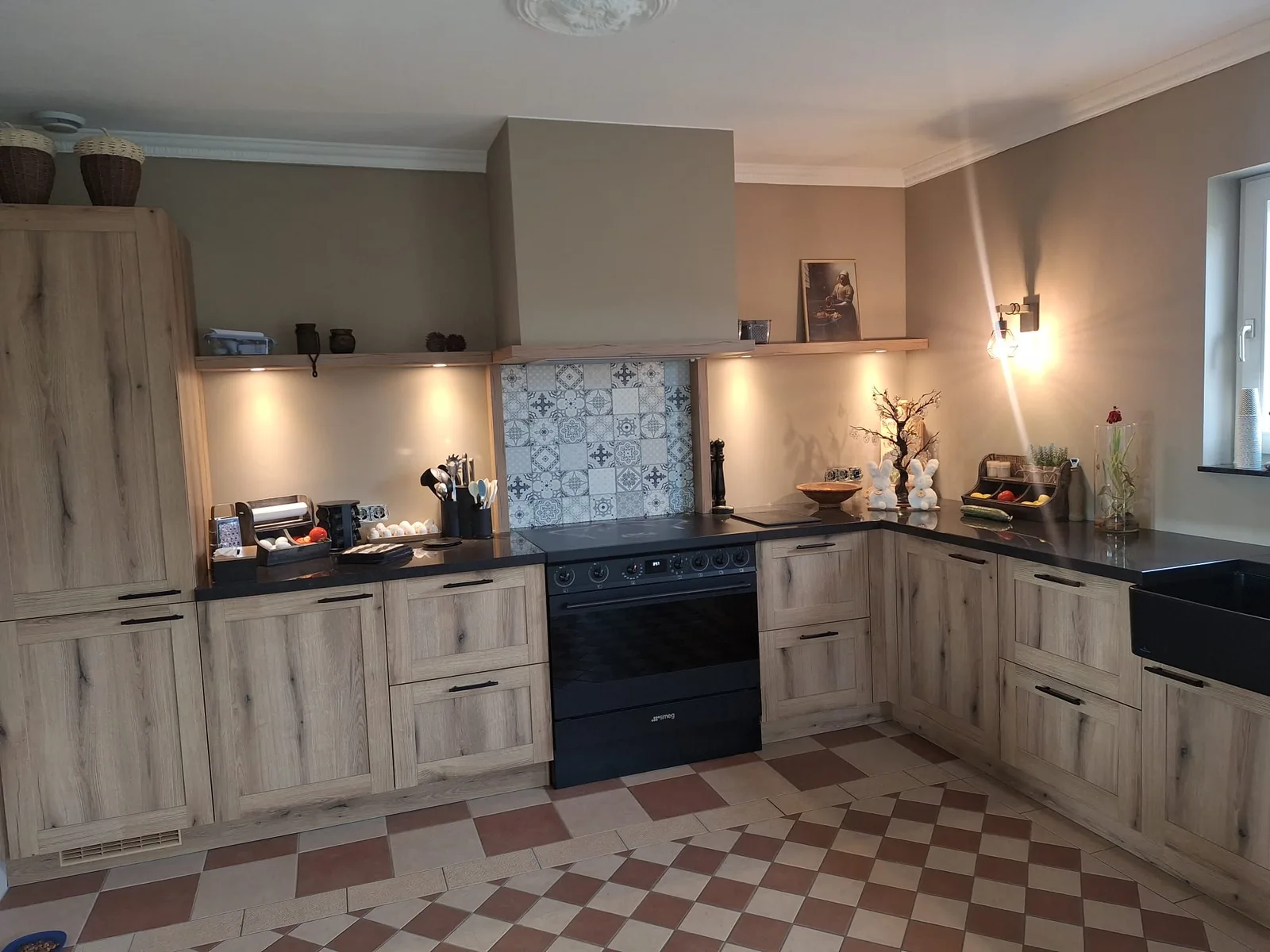
Anyone searching for an aluminium kitchen backsplash quickly runs into two things that are both called aluminium and are yet not the same: solid aluminium and aluminium composite. The difference is half a millimetre, about fifty euros, and the question of whether you cook on gas. This article explains which of the two suits your kitchen, how they compare with glass, and what to watch for in size and installation.
Two kinds of aluminium, and that difference sets the price
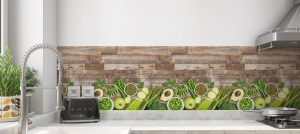
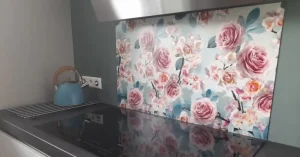
An aluminium kitchen backsplash is, with us, always a made to measure panel with the print on the front and a protective coating over it. What differs is what is inside that panel.
DW Original is aluminium composite. A 3 mm panel built up from aluminium and plastic. Light, stable and the most affordable of the three. This is the material most customers choose.
DW Solid is solid aluminium. A single panel of 1.5 mm, entirely of aluminium. Thinner, then, but sturdier and better able to take heat, because there is no plastic in it that can work.
| DW Original (composite) | DW Solid (solid) | |
|---|---|---|
| Build up | 3 mm, aluminium and plastic | 1.5 mm, entirely aluminium |
| Hob | Induction and ceramic, gas at a distance | Gas and air fryers too |
| Weight | Light, easy to hang yourself | Heavier |
| Price | From around 100 euros | From around 150 euros |
| Razor sharp | Razor sharp |
That last row matters more than it looks. People often assume the more expensive material gives the better image. It does not: the design and the print quality are identical. You are paying for heat and robustness, not for sharpness.
When you really need solid aluminium
There are three situations in which the fifty euro difference is worth it.
- You cook on gas. An open flame drives the wall directly behind the burners far higher in temperature than an induction hob does. Solid aluminium does not warp from that, not even if you cook on it daily for years.
- You have an air fryer or an oven that blows backwards. This is the most underestimated reason. The appliance stands on the worktop, the hot air goes straight up the wall, and it happens every day in exactly the same spot.
- The kitchen gets heavy use. A family that cooks every day, a utility room where everything gets knocked against the wall, or a catering kitchen. Solid aluminium resists scratches better and stands up to daily knocks.
When composite is more than enough
If you cook on induction or ceramic, and there is no appliance blowing at the wall, aluminium composite is the right choice in almost every case. Do keep at least 10 centimetres between the hob and the wall.
Weight plays a part too. A composite panel three metres wide goes up with two people without anything special. If you want to fit the wall yourself, that is a real advantage.
Aluminium or glass?
The third option is toughened glass, 6 mm thick with us and resistant to temperatures up to 250 degrees. Glass gives a print a depth that aluminium cannot reach, because you look through a layer at the image. Colours come across more intensely as a result.
Against that, glass is heavier, starts at around 200 euros and is less forgiving during installation. You would rather not adjust a sheet of glass yourself if something is not quite right; the same goes for an aluminium panel, but that one is a good deal easier to handle.
In short: choose glass if the look is decisive, and aluminium if you want a wall you barely notice in daily use. If it is the metal look itself you are after rather than a print, have a look at the stainless steel look backsplash.
How large can a single panel be?
Solid aluminium goes up to 300 by 146 cm, and that size can be used portrait or landscape. For most kitchens that is plenty to do the whole wall in one piece, from worktop to wall units.
If your wall is longer, we deliver the backsplash in several parts that meet seamlessly. That is also the biggest practical difference from an off the shelf wall panel from a DIY store, which comes in fixed widths and therefore forces visible joins in places you did not choose. If you have an IKEA kitchen, that counts double, because those panels are 119.6 cm wide.
Cut outs for sockets, taps and an extractor hood are included in the measurements. So you do not have to saw anything yourself.
Matt or gloss
Both coatings protect equally well against moisture, dirt and scratches. The difference is purely visual and practical:
- Matt. Understated and modern. Fingerprints and water droplets show up less, which helps behind a sink.
- Gloss. Reflects light and gives colours more intensity. In a narrow or dark kitchen the room looks larger for it.
In doubt? Choose matt with a busy design and gloss with a quiet one. In practice, gloss on a busy pattern quickly becomes restless.
Installation: usually straight over the existing tiles
In most kitchens the old tiling can stay. If the tiles are flat and well bonded, you glue the panel straight over them with assembly adhesive. That saves demolition, dust and a day of work. Heavy relief in the tiles or loose ones need preparation first.
Because solid aluminium is only 1.5 mm thick, the build up against your worktop is barely noticeable. The guide to fitting a kitchen backsplash sets out step by step how to go about it. Unsure about your wall? Send a photo through contact and we will take a look.
What does an aluminium kitchen backsplash cost?
Solid aluminium starts at around 150 euros, aluminium composite at around 100 euros. What you end up paying depends mainly on the surface area, so on your own dimensions. There are no standard sizes to work around: you enter width and height, choose a design from the backsplash collection or upload your own photo, and see the price straight away.
When comparing with tiles, count in that a panel needs no tiler and that the existing wall stays where it is. In practice that often saves more than the difference between the materials themselves.
Feel it first: order samples
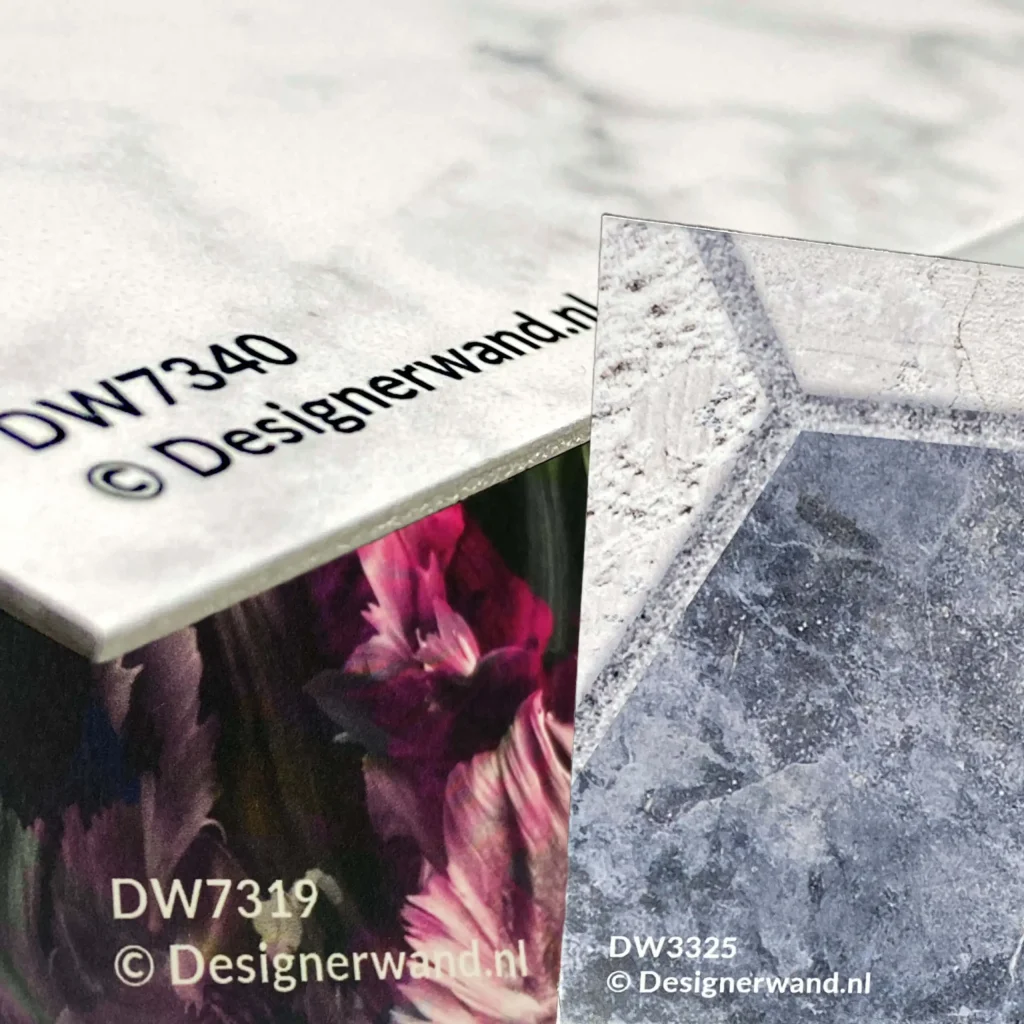
The difference between matt and gloss does not show on a screen, and you only feel the thickness of the panel when you hold it. The DW Solid sample pack contains samples in both finishes, so you can lay them next to your kitchen fronts.
That last step is not a needless one. A screen always renders colour slightly differently from the print. Would you rather see everything side by side in real life? Visit the showroom in Veenendaal.
Frequently asked questions about an aluminium kitchen backsplash
What is the difference between solid aluminium and aluminium composite?
Aluminium composite (DW Original) is a 3 mm panel built up from aluminium and plastic. Solid aluminium (DW Solid) is 1.5 mm and consists entirely of aluminium. Composite is lighter and cheaper, solid aluminium takes more heat and resists scratches better. For print quality the choice makes no difference at all.
Is an aluminium kitchen backsplash suitable behind a gas hob?
Solid aluminium is. The panel does not warp under prolonged exposure to high temperatures, not even directly behind an open flame. Aluminium composite can also go behind gas with a clearance of at least 10 centimetres, but if you cook on gas intensively or the hob sits closer to the wall, choose solid aluminium or toughened glass.
Can an aluminium backsplash go over existing tiles?
Yes, in most kitchens the old tiling can stay. If the tiles are flat and well bonded, you glue the panel straight over them with assembly adhesive. At 1.5 mm the panel barely builds up against your worktop. Heavy relief or loose tiles need preparation first.
Does aluminium rust in a kitchen or bathroom?
No. Aluminium contains no iron and therefore cannot rust. On top of that the print sits under a protective coating, so the surface also copes with moisture, grease and cleaning products. That makes the material just as usable behind a basin as behind a hob, see also our page about a wall panel in the bathroom.
How do I clean an aluminium kitchen backsplash?
With a soft cloth, warm water and a mild detergent if needed. There is no grout in the panel, so grease and limescale have nowhere to lodge. Do not use a scouring pad or an aggressive cleaner, they attack the coating.
How large can an aluminium kitchen backsplash be?
A panel of solid aluminium goes up to 300 by 146 cm, usable portrait or landscape. If your wall is longer, we deliver the backsplash in several pieces that meet seamlessly. Cut outs for sockets, taps and an extractor hood are included in the measurements.
Further reading
- Solid aluminium (DW Solid). All the specifications, sizes and frequently asked questions about the material.
- DW Original. The aluminium composite most backsplashes are printed on.
- Toughened glass (DW Glass). If you are going for the depth of glass after all.
- Fitting a kitchen backsplash. Hanging it yourself, including over existing tiles.
- All kitchen backsplashes. Hundreds of designs, each printable on all three materials.